You’re running late. Hair looks oily. Washing and drying feel impossible right now. So you reach for the dry shampoo.
Most people have been there. And most people have wondered at some point — is dry shampoo safe to use regularly or is it quietly damaging your hair?
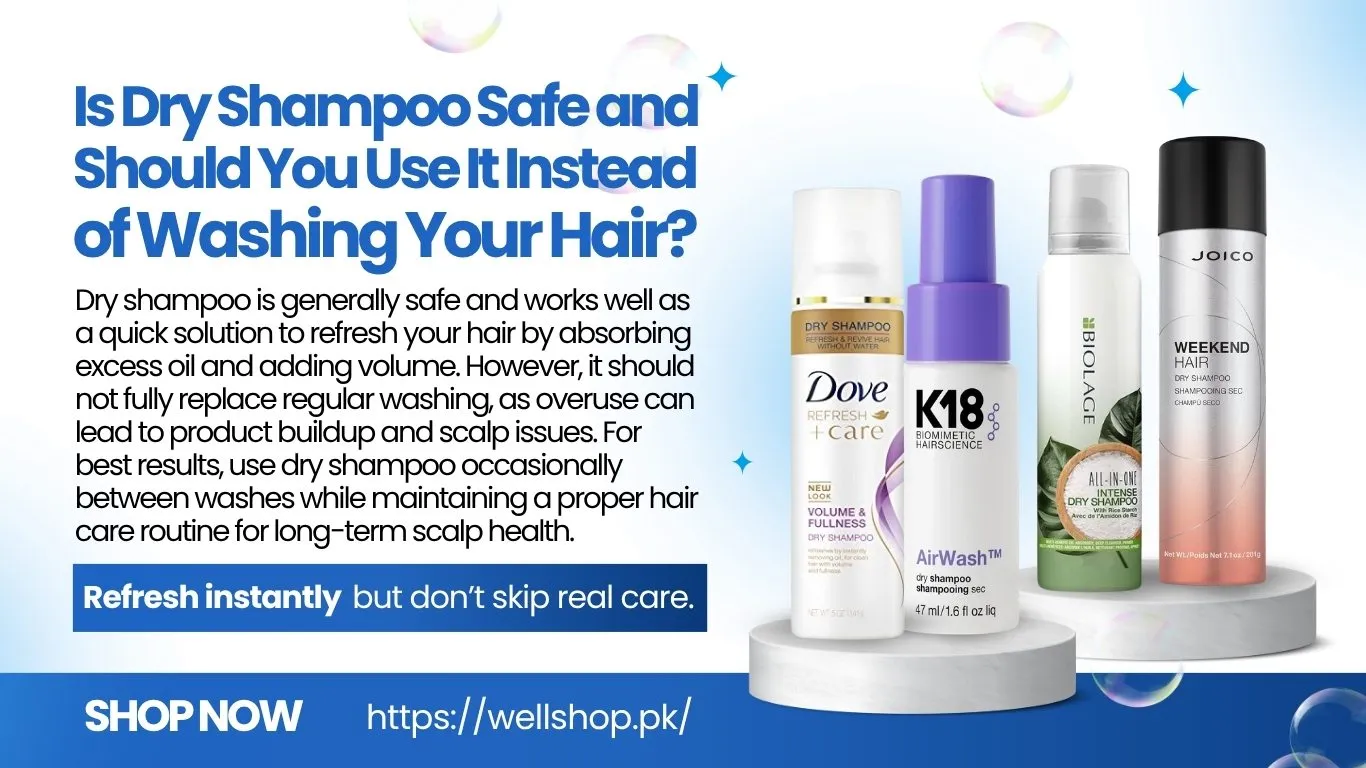
The correct answer is it based on how you use it. Dry shampoo is a useful tool. But like any tool it causes problems when misused. Everything you need to know before adding it in your daily routine is covered in this blog.
Is Dry Shampoo Safe?
For occasional use yes. Dry shampoo is generally safe when utilized between washes as a temporary fix. The issue starts when people use it too frequently or leave it on the scalp with out washing it out properly.
The product works by absorbing oil from the roots. Starch or clay particles in the formula attach to the oil and lift it away when you brush through. That’s the extent of what it does. It does not clean. It does not nourish. It simply masks the oil temporarily.
Used two to three times a week between proper washes dry shampoo poses no real risk to healthy hair. Used daily as a substitute for washing it creates a different story.
Are Dry Shampoos Sulfate Free?
The majority of contemporary dry shampoos do not include sulfates. Because sulfates are the washing ingredients in common shampoos that deprive hair of its natural oils this is important to understand. Sulfates have no place in the mix because dry shampoo fails to clean at all.
What dry shampoos typically include are propellants, starches, alcohol as well as fragrance ingredients. If your scalp is sensitive check the ingredient list for alcohol content. High alcohol formulas can cause irritation with repeated use.
When using Viviscal Gorgeous Growth Densifying Shampoo for thickening hair users frequently inquire if dry shampoo may be used in between treatments. The short answer is no. A densifying shampoo offers active substances while cleaning the scalp. That is not what dry shampoo does.
How Your Hair Reacts To Dry Shampoo?
It can be helpful but over use can cause problems. Here are some common effects:
Can It Cause Dandruff?
Yes if overused. Product buildup on the scalp blocks follicles and creates an environment that promotes flaking and irritation. If you already notice flaking after regular dry shampoo use that’s the likely reason. Making the switch to proper washing extra frequently & utilizing a medicated dandruff shampoo when needed directly addresses buildup related scalp problems.
Does It Damage Your Hair
Not directly because dry shampoo does not break down the hair structure. But the buildup it creates with time weakens the environment in which the hair grows. Clogged follicles produce weak strands. Hair that grows from a clogged and irritated scalp breaks more easily and grows more slowly.
Can It Affect Hair Dye?
This is something most people don’t think about. Dry shampoo — especially tinted formulas — can deposit color on chemically treated hair over time. White or light-toned dry shampoos leave a visible residue on dark hair if not fully brushed out. The residue doesn’t permanently alter the dye but it changes the visual appearance of the color in ways that feel premature.
How Dry Shampoo Affects Your Skin?
Spraying the shampoo excess close to the scalp can cause irritation. Most formulas recommend placing the can twenty five to thirty centimeters from the head. At that distance the propellant disperses safely. At point-blank range the concentrated spray combined with alcohol content in some formulas causes a cold-burn sensation. For sensitive scalps this is more than just uncomfortable it can trigger redness and temporary hair fall.
People exploring scalp friendly options in hair growth phases frequently turn to Grow Me Shampoo as a proper washing solution that boosts scalp health with out stripping.
Dry Shampoo Daily Use: Is It Really Safe?
Not inherently. But the pattern of use matters more than the product itself.
Using dry shampoo as a convenience tool between proper washes is fine. Using it to avoid washing entirely creates scalp buildup, follicle blockage and over time a noticeable decline in hair quality.
 The scalp needs to be cleaned regularly. Oil production is constant. Bacteria live in that oil. Leaving the scalp unwashed for long periods also with dry shampoo masking the oiliness creates the conditions for irritation, odor & weakened hair growth.
Is It Best To Wash Your Hair or Use Dry Shampoo?
Here is the table that answers this clearly:
| Aspect | Washing Hair | Dry Shampoo |
| Cleans scalp | Fully cleans | Does not clean just absorbs oil |
| Oil control | Removes oil | Hides oil temporarily |
| Time | Takes long | Quick & easy |
| Scalp health | Better long term | Can cause buildup if overused |
| Volume | Normal | Adds volume/texture |
| Best use | Regular cleaning | Between washes |
Note: For proper care & scalp health washing your hair is mandatory. While the shampoo is helpful for last minute touch ups it should not be used in place of routine washing.
Should The Shampoo Be Used on Clean or Dirty Hair?
Each works but for different purposes.
On dirty oily hair dry shampoo absorbs existing oil and restores volume quickly. That’s the most common use and it works well for a same-day refresh.
On clean hair dry shampoo acts as a styling product. Applied the night before it creates a texture base that makes next-morning styling faster and holds better throughout the day. Many hairstylists use this technique professionally.
The timing matters too. Apply dry shampoo and wait thirty seconds before touching it. That pause lets the particles fully absorb the oil before you brush. Skipping that pause and brushing immediately reduces the product’s performance.
Final Words:
Is dry shampoo safe? Yes when utilized the right way. Between washes, not instead of them. With proper brushing not as a daily scalp replacement. It’s a smart addition to a hair routine. Just not a substitute for one.